Seyðisfjörður Cruise Port: Berths, Tenders and What Fits in a Call
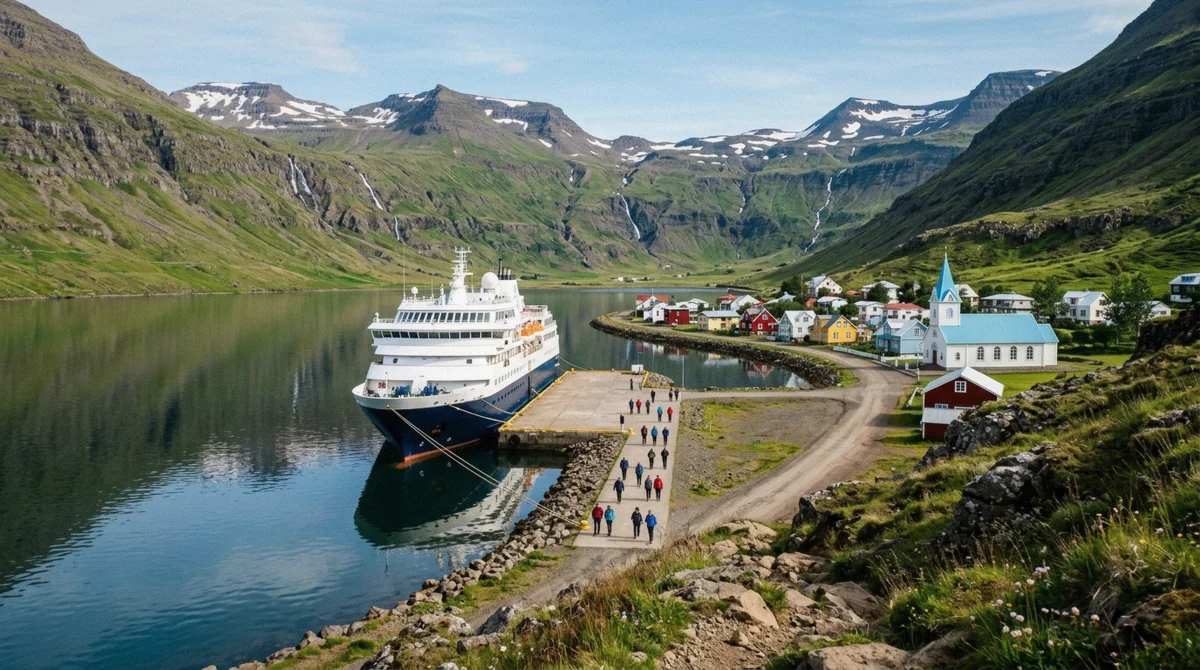
The Seydisfjordur cruise port takes ships at two short piers at the head of a 17 km fjord, and anything much over 170 metres anchors out and tenders in. Either way you land 0.3 km from the town centre. What you can do with the rest of the day is set by two numbers: how many hours the ship gives you, and how many of them the road takes. This page covers both.
Quick answer
Two commercial piers take ships alongside: Strandarbakki, the south pier at 170 m, and Bjólfsbakki, the north pier at 150 m. Depth alongside is 10 m at low tide and the maximum permitted draft is 9 m, so larger ships anchor in the fjord and tender to the ferry terminal area. Both landing points are 0.3 km from the town centre on flat ground. A typical call arrives between 07:00 and 08:00 and sails between 17:00 and 19:00, giving 8 to 10 hours ashore, and tendering adds 20 to 40 minutes at each end.
Key takeaways
- Alongside berths: Strandarbakki 170 m and Bjólfsbakki 150 m, both a flat 0.3 km from the centre
- Ships over about 170 m anchor and tender; the tender dock sits 0.2 km from the terminal
- Typical call: in at 07:00 to 08:00, out at 17:00 to 19:00, so 8 to 10 usable hours
- Season runs May to September and peaks June to August
- No rental desk, no scheduled bus: anything beyond the town needs a booked trip or a taxi
- Longest trips run seven hours, which is tight on a tendered call and comfortable on a docked one
Where the Ship Ties Up
The port authority is Ports of Múlaþing, and the published figures are the ones worth planning against.
| Berth | Length | Notes |
|---|---|---|
| Strandarbakki, south pier | 170 m | The longer of the two commercial berths |
| Bjólfsbakki, north pier | 150 m | Also used by working vessels |
| Depth alongside | 10 m at low tide | Maximum permitted draft 9 m |
| Anchorage | 40 m at low tide | For ships too long for the piers |
| Floating tender dock | 20 m by 2.5 m | 0.2 km from the terminal |
| Piers to town centre | 0.3 km | Flat, five to ten minutes on foot |
In practice that means small and mid-size ships come alongside and everything larger anchors in the fjord. There is no shuttle bus, because there is nowhere far enough away to need one.
If your ship tenders
Tendering adds 20 to 40 minutes at each end of the day, and it is the single variable that breaks itineraries here. A seven-hour trip against a nine-hour call has two hours of slack when you walk off a gangway and rather less when 2,000 people are queuing for a tender.
The guides know this. Operators park in the parking area directly opposite the tender landing rather than at the standard coach stop, and they hold sign boards with the tour name. One traveller in July described their ship switching to tenders on the morning of the trip, everyone leaving late, and the guide reworking the timings so the group still saw everything.
What you should do differently: take the earliest tender you can, and on a tendered call pick a five-hour trip rather than a seven-hour one.
The season
The port recommends May through September and the calls peak between June and August. Outside that window there is no cruise traffic, most of the small businesses in the town close, and the pass over the mountain behind the town shuts in storms.
The other ship in the fjord is the Norröna, the Smyril Line ferry from Denmark by way of the Faroe Islands, which runs from March to October. It uses the ferry terminal, and on a ferry day the town has a second wave of arrivals with cars.
What Fits in the Hours You Have
The town is 0.3 km away and everything else is 90 minutes of road. That gap is the whole planning problem, and it is why the trip lengths cluster the way they do.
| Option | Hours | Road time | Works on a tendered call? |
|---|---|---|---|
| The town on foot | 1 to 3 | None | Yes, always |
| Fjord wildlife cruise | 3 | None, it leaves from the harbour | Yes |
| Canyon by coach, rim only | 5 to 6 | About 3 hours | Yes, on a 9 hour call |
| Puffin colony | 5 to 6 | About 3 hours | Yes, on a 9 hour call |
| Canyon on foot, east side | 7 | About 3 hours | Tight, avoid on a short call |
| Private jeep | 5 | About 2 hours | Yes, and it flexes |
Operators build every schedule to return at least an hour before the ship sails, and in ten years of these trips that margin is what makes them work. It is also why nobody sells an eight-hour excursion here: there is no room for one.
How a Call Actually Runs
A nine-hour call on a ship that comes alongside, which is the common case.
-
07:30
Alongside
Ship secured at Strandarbakki or Bjólfsbakki. Gangway down within the half hour.
-
08:00
Coaches waiting
Operators are at the terminal with sign boards. Tanni Travel start pickup 15 minutes before departure; Saga Travel begin 30 minutes ahead.
-
08:15
Trips leave
The canyon and puffin coaches go first, since they have 90 minutes of road in each direction.
-
09:00
The town fills
Independent passengers reach the rainbow street and the church. Skaftfell opens for the season.
-
13:30
Five-hour trips return
Coaches back at the pier. Time left for the town, the harbour and a coffee.
-
15:30
Seven-hour trips return
The hiking groups come back last, an hour or more before departure.
-
17:00
All aboard
Usually an hour before the ship sails. On a tendered call, considerably earlier.
Ashore Practicalities
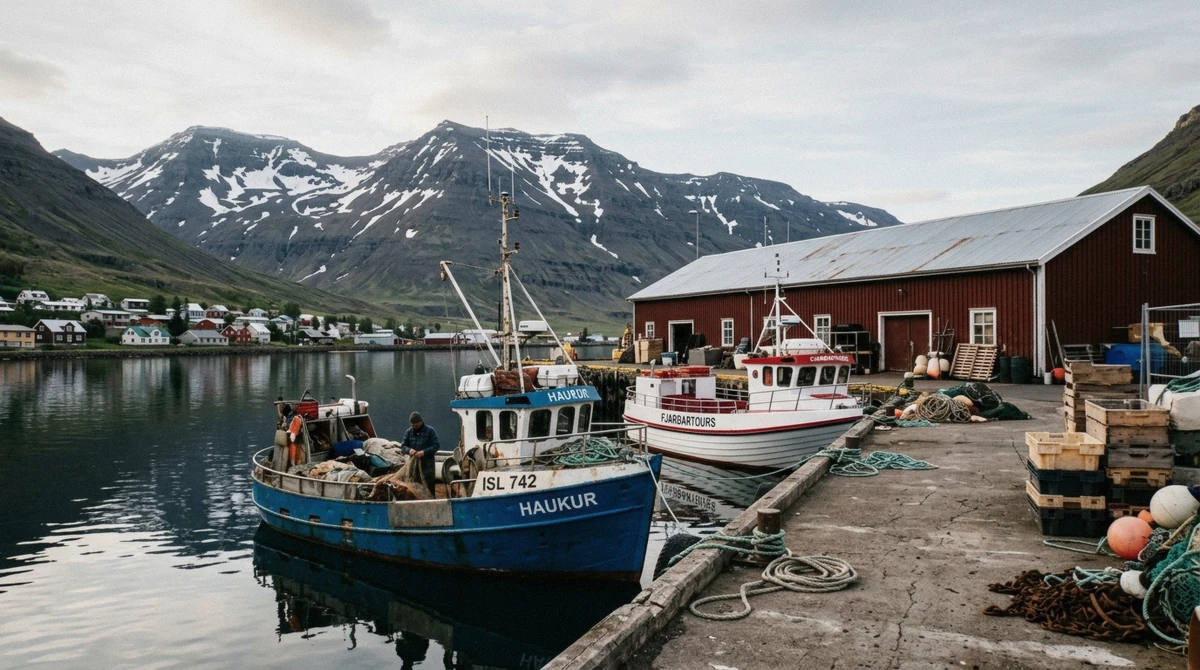
A port of this size has no terminal building in the airport sense. What it has is a small town, five minutes away, that carries on working while you are in it.
- Cards work everywhere and cash is close to unnecessary anywhere in Iceland
- There is no left luggage and no need for it, since the ship is a few hundred metres away
- Public toilets are in the cafés and at the harbour, not on the street
- Mobile coverage is fine in the town and patchy over the pass; the coach WiFi on some trips is the reliable option
- Taxis exist but are few. If you want one for Gufufoss, arrange it before you land rather than on the day
- The shop and the cafés are small and a ship empties them, so eat before or after the rush
Ship excursion or book it yourself
The same operators run both. A ship excursion is more expensive and buys you one thing: if the coach is late, the ship waits.
Booking directly costs less and the trips are built around ship departure times anyway, because that is who the customers are. The trade is that the responsibility for being back on time is yours. On a five-hour trip with a nine-hour call, that is a comfortable trade. On a seven-hour trip with a tendered eight-hour call, it is not, and the honest advice is to take the shorter option rather than the cheaper booking route.
Everything running from this pier, with the hours and the road time for each, sits in the full Seydisfjordur tours comparison.
Two ships in port
On the busiest weeks of July and August a second ship can be in the fjord on the same day, one alongside and one at anchor. That does two things to your morning.
The first is the tender queue, which stops being a formality. The second is capacity: each operator runs one coach per departure, and when two ships want the same canyon trip, the seats are gone before either gangway goes down. This is the specific reason booking ahead matters more here than at a large port, where there are twenty operators and a spare bus.
It also shows in the town. A quiet call day means a fishing village with an art gallery. Two ships means the rainbow street has a queue on it, and the case for taking a trip out of the fjord gets stronger.
Picking by the Length of Your Call
If your call is under six hours, or you are tendering off a large ship
stay close. The three-hour fjord cruise leaves from the harbour, and the town fills whatever is left.
If you have eight to ten hours alongside
anything on the list works. The canyon coaches at five to six hours leave the most margin.
If you want the canyon at river level
take the east-side hike, but only on a nine or ten hour call where the ship is alongside.
If you are here between mid-April and mid-August
the puffin colony is worth the three hours of road. Outside those months it is a drive to an empty rock, as the season page explains.
If the weather has shut the pass
the operators cancel and refund, and the town is still there. That is the argument for free cancellation rather than a ship excursion deposit.
Cruise Port Questions
Does Seyðisfjörður dock or tender?
Both, depending on the ship. Vessels up to about 170 m come alongside at Strandarbakki or Bjólfsbakki. Larger ships anchor in the fjord and tender to the ferry terminal area, which adds 20 to 40 minutes at each end of the day.
How far is the town from the cruise pier?
0.3 km, on flat ground, five to ten minutes on foot from either the berths or the tender landing. There is no shuttle because none is needed.
How long is a typical port call?
Most ships arrive between 07:00 and 08:00 and sail between 17:00 and 19:00, which gives 8 to 10 hours ashore. Operators build every trip to return at least an hour before departure.
Can I hire a car in Seyðisfjörður?
No. There is no rental desk in the town and no scheduled bus service over the pass. The nearest rental is at Egilsstaðir, 27 km away, which is itself the problem you would be trying to solve. Off a ship, that leaves guided trips and the occasional taxi.
Is it worth booking a trip or just walking around?
Both are defensible. The town fills two hours on foot and costs nothing. If you want the basalt canyon, the puffin colony or the geothermal pools, all of them are 30 to 90 minutes of road each way, and a booked trip is the only way to reach them. The full list has the hours for each.
What happens if my ship is late?
The operators watch the arrivals and adjust. Trips here are timed to ship movements rather than the clock, and guides have reworked whole itineraries on the morning when a ship switched to tenders. Free cancellation up to 24 hours ahead covers the case where the call is dropped altogether.
When is the cruise season here?
May through September, with the peak from June to August. The Norröna ferry from Denmark runs March to October. Outside that window the town is quiet, most seasonal businesses are shut, and the mountain road out closes in storms.
Is there anything at the pier itself?
Very little, and it does not matter. There is no terminal hall, no shops on the quay and no tourist market. What there is instead is a town five minutes away with cafés, a gallery and a church, which is a better arrangement than most ports manage. The information centre by the harbour is where several operators meet their groups.